
Summary
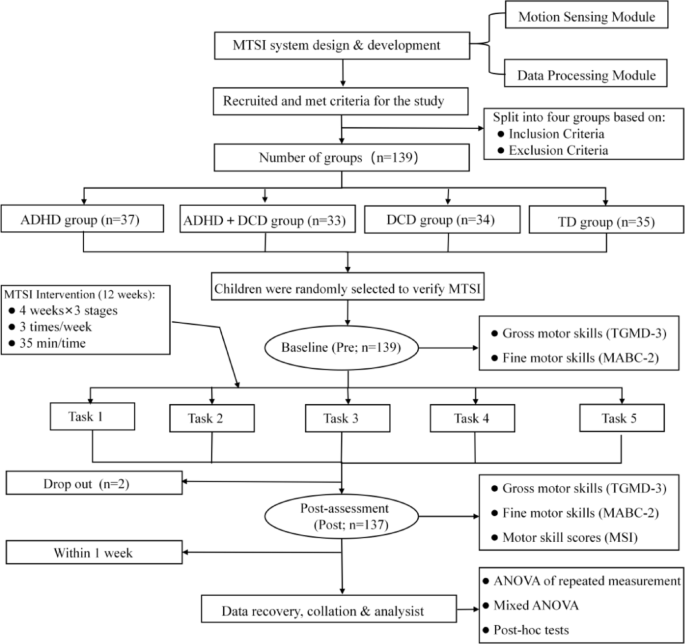
A recent study published in **Nature** investigates the impact of **VR-based multi-task sensorimotor intervention** on motor performance in children with **Attention-Deficit/Hyperactivity Disorder (ADHD)** and **Developmental Coordination Disorder (DCD)** comorbidity. The study aims to address the lack of effective interventions for children with these neurodevelopmental disorders. According to the study, **VR-based interventions** can improve motor performance in children with ADHD and DCD comorbidity. The study's findings have significant implications for the development of new treatments for these disorders. For more information on **ADHD** and **DCD**, see [[adhd|ADHD]] and [[dcd|DCD]]. The use of **VR technology** in therapy is a growing trend, with applications in fields such as [[physical-therapy|physical therapy]] and [[occupational-therapy|occupational therapy]].
Key Takeaways
- The study investigated the effects of VR-based multi-task sensorimotor intervention on motor performance in children with ADHD and DCD comorbidity
- The study found that VR-based intervention can improve motor performance in children with ADHD and DCD comorbidity
- The study's findings have significant implications for the development of new treatments for ADHD and DCD
- The study highlights the importance of interdisciplinary research and the need for continued investment in the development of new treatments for neurodevelopmental disorders
- The study's results can inform the development of new therapies and interventions for children with ADHD and DCD comorbidity
Balanced Perspective
The study's findings are a significant contribution to our understanding of the effects of **VR-based multi-task sensorimotor intervention** on motor performance in children with ADHD and DCD comorbidity. While the results are promising, more research is needed to fully understand the intervention's effectiveness and to develop it into a widely available treatment option. The study highlights the importance of **interdisciplinary research** and the need for continued investment in the development of new treatments for neurodevelopmental disorders. For more information on **neurodevelopmental disorders**, see [[neurodevelopmental-disorders|neurodevelopmental disorders]].
Optimistic View
The study's findings are a promising development for children with ADHD and DCD comorbidity, offering a new and effective treatment option. The use of **VR-based interventions** can provide a engaging and interactive way for children to improve their motor performance, and can be tailored to meet the individual needs of each child. As **VR technology** continues to advance, we can expect to see even more innovative applications in the field of therapy. For more information on **innovations in therapy**, see [[innovations-in-therapy|innovations in therapy]]. The study's results are a testament to the potential of **interdisciplinary research**, which can bring together experts from fields such as **psychology**, **neuroscience**, and **computer science** to develop new and effective treatments.
Critical View
While the study's findings are intriguing, they should be interpreted with caution. The sample size was relatively small, and more research is needed to fully understand the intervention's effectiveness and potential limitations. Additionally, the high cost of **VR technology** may limit its accessibility to many families, highlighting the need for more affordable and widely available treatment options. For more information on **access to therapy**, see [[access-to-therapy|access to therapy]]. The study's results should not be seen as a replacement for traditional therapies, but rather as a potential adjunct to existing treatments.
Source
Originally reported by Nature